NOTES FROM THE TEAM
Reduce phone tag in family medicine with structured phone intake
I had a conversation last year with the medical director of a four-doctor family practice in Ohio. He was complaining about no-shows. I asked him how the appointments got booked. He said ‘people call us’. I asked what happens when they call during lunch. He paused. ‘They leave a voicemail and we call them back.’ I asked how long that takes. ‘Probably… a couple days.’ That’s the moment we both realized his no-show problem and his phone-tag problem were the same problem.
Reduce no-shows in family medicine by replacing phone tag with one clean intake. Most calls don’t fit one script. A refill request needs pharmacy details. A results question needs the right provider. A chest-pain call needs escalation language instead of voicemail. The practices that fix this don’t add staff — they fix the workflow.
What follows is the 90-day playbook I’ve walked through with three or four family practices. It works because it’s incremental: nobody has to change everything at once.
Related: Physician answering service and DeskMD pricing.
Day 1-7: Measure the phone-tag baseline
Before changing anything, count what’s happening today. Pull last month’s call-log data from your phone system. Count answered calls, voicemail messages, abandoned calls, and same-patient repeat callbacks (a tell-tale sign of phone tag).
Most family medicine practices are surprised by the abandoned-call number. A typical office abandons 15 to 25 percent of inbound calls during business hours, mostly during peak (8-10 AM and 2-3 PM).
Measure no-show rate over the same period and segment by appointment type. Routine physicals and follow-up visits typically have higher no-show rates than acute-care appointments. Note the segments where intake fixes will help most.
Day 8-21: Audit how appointment requests reach the schedule today
Walk the appointment-booking workflow with the front-desk team. Where does an appointment request enter? Voicemail? Walk-in form? Patient portal? Phone call to the receptionist? Email to the practice address?
Each entry point has its own loss rate. Voicemail loses the most. Phone-call requests during peak loses second-most. Patient-portal requests usually have the lowest loss because the patient is doing the work.
Identify the two largest leaks. For most family medicine practices, it’s voicemail and phone-tag during peak hours.
Day 22-30: Pilot a structured phone intake on overflow
Forward overflow calls — the ones that would have gone to voicemail — to a structured phone-intake service. Keep your existing front desk for primary call handling. The structured service catches what slips through.
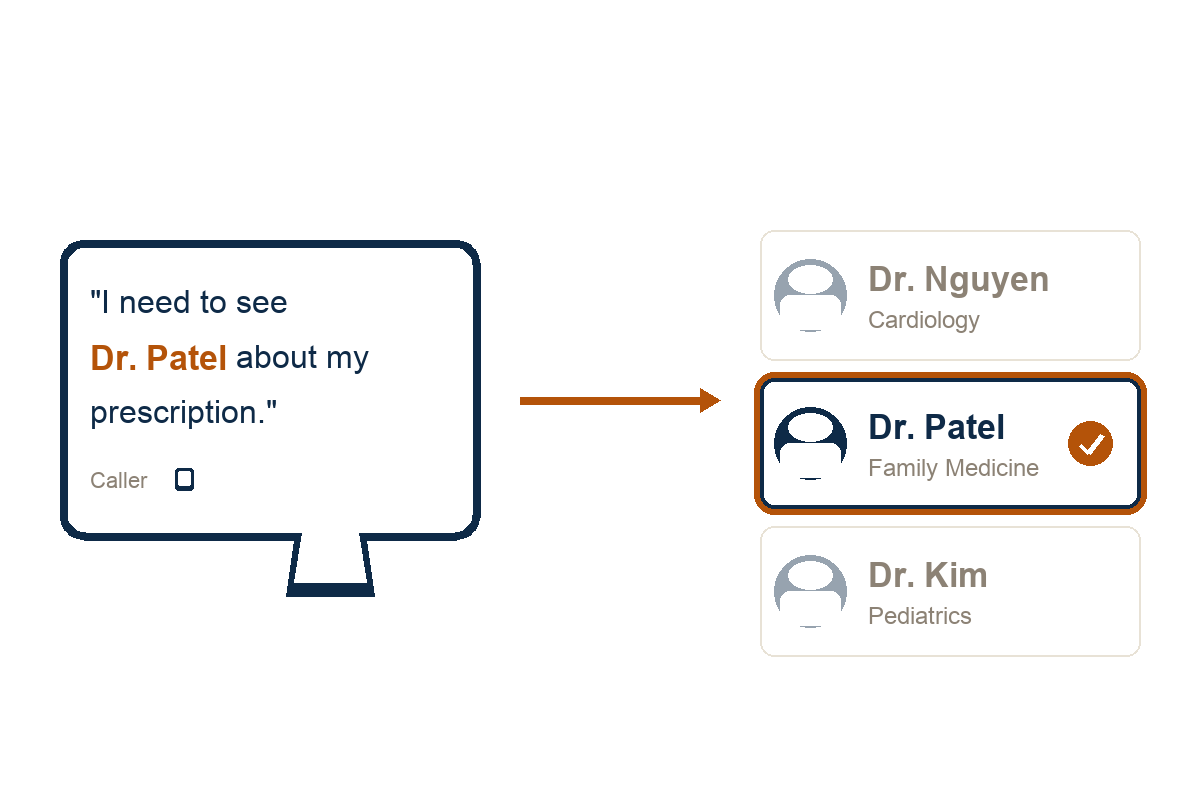
Configure the intake to capture appointment-request fields explicitly: preferred provider, preferred dates, preferred time of day, reason for visit, callback method. The morning queue should give the scheduler everything they need to book without a callback.
Run for two weeks. Compare the no-show rate of appointments booked from structured intake versus appointments booked from voicemail callbacks. Practices we’ve watched usually see a 15-25% drop in the structured-intake bucket within the first month.
Day 31-60: Convert phone tag into one-call resolution
Phone tag in family medicine usually has one of three causes. Missing fields (the patient didn’t say which provider). Wrong-time-of-day (the staff calls back outside the patient’s availability window). Wrong-channel (the patient prefers text but the practice calls).
Structured intake captures all three at the moment of the original call. Provider preference. Callback time window. Preferred channel. The practice can then return the call once, at the right time, on the right channel, with the right context.
For practices that route urgent calls to the on-call provider directly via SMS or email dispatch, urgent-call resolution time drops from hours to minutes. We watched one clinic measure this; their median time-to-callback for urgent issues went from 4.5 hours to 18 minutes.
Day 61-90: Add reminder and confirmation cadence
Structured intake captures the appointment request. To reduce no-shows further, add reminder cadence to the booking confirmation. A confirmation message at booking. A reminder 48 hours before. A final reminder the morning of the appointment.
Most patient-portal systems support automated reminder cadence. If yours doesn’t, evaluate whether SMS reminders can be added at the practice level. Industry data consistently shows 24-hour reminders cut no-show rates by 20 to 40 percent.
Reminders work best when the patient can confirm or reschedule with one tap. A reminder that requires calling the office to reschedule is a reminder that gets ignored.
Common mistakes that keep no-shows high
- Treating phone tag as a staffing problem rather than a workflow problem.
- Adding more receptionists to handle peak volume instead of routing overflow.
- Sending reminders by email only when most patients prefer SMS.
- Booking appointments without verifying the patient’s preferred date window.
- Ignoring the after-hours call entirely — those callers are pre-qualified for booking.
- Routing all messages to a generic inbox instead of provider-specific routing.
Common questions
Questions practices ask first
How much does structured intake reduce no-shows?
Industry data is variable, but practices that combine structured intake with consistent reminder cadence often see no-show rates drop by 20 to 40 percent over 90 days. Yours will depend on your starting point and patient mix.
Do I need to replace my front desk?
No. The structured intake handles overflow and after-hours. The front desk owns the primary call relationship and the booking decisions.
Will SMS reminders annoy patients?
Usually not, when frequency is controlled (confirmation + 48-hour + same-day) and patients can opt out. Most patients prefer SMS over email or voice reminders by a wide margin.
How fast can a practice deploy structured intake?
Most family medicine practices forward their line in one business day. The reminder cadence usually goes live within a week, depending on the patient-portal vendor.
What about chronically no-showing patients?
Structured intake helps surface the pattern (a patient who reschedules three times before showing) but doesn’t solve it on its own. Practice policy on chronic no-shows still applies; the data just makes the pattern visible earlier.
What to do next
Run the 90-day playbook in your family medicine practice
Stop missing calls. Start sleeping at night.
Give patients a real answer after hours and give your team a clean record in the morning.